
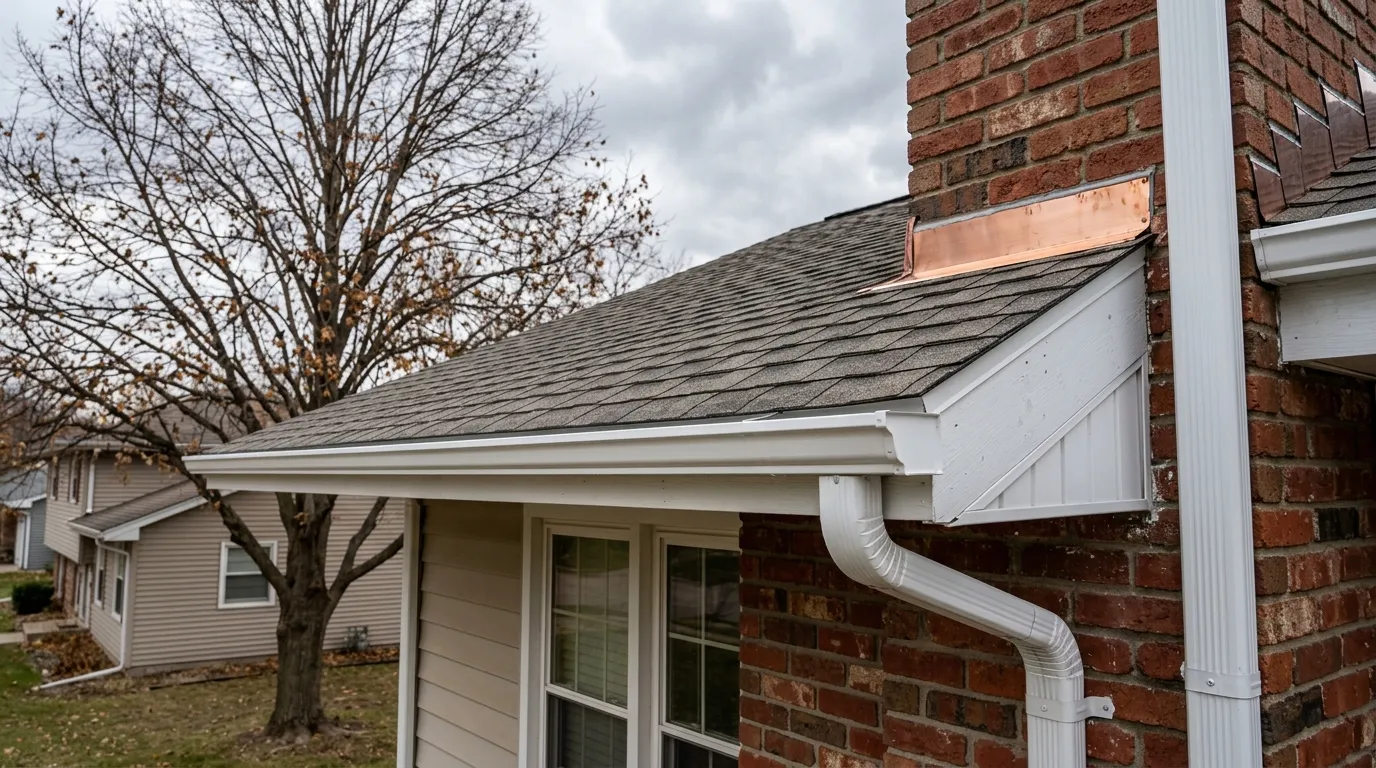
Late autumn in Ohio brings crisp mornings, vibrant foliage across Wayne, Ashland, and Richland counties, and that unmistakable chill in the evening breeze. But once the colorful leaves drop, homeowners face a brief, critical window of opportunity before winter locks the landscape into sub-freezing temperatures.
Winter in the Buckeye State rarely arrives quietly. Between heavy, damp lake-effect snows and rapid freeze-thaw cycles, cold weather will search out any neglected seam, clogged gutter, or loose piece of flashing on your roof.
Taking time to perform a thoughtful seasonal walkaround during mild autumn afternoons can help you spot small maintenance needs before they become cold-weather emergencies.
Here is a practical 5-point checklist designed specifically for the conditions Ohio homes face every winter.
1. Roof Valleys and Gutter Drainage Pathways
During October and November, falling oak, maple, and pine needles collect naturally inside roof valleys—the V-shaped intersections where two roof planes channel rainwater together.
GUTTER & RUNOFF DRAINAGE PROTOCOL
Clear wet leaf dams from roof collection troughs
Scoop decomposing organic sludge and pine needles
Confirm free flow from roofline to splash block
Direct water 4-6 feet away from foundation walls
Why Valleys Matter
When leaves, small twigs, and airborne organic debris accumulate in roof valleys, they form a sodden compost that traps moisture against the shingles. When cold weather hits, that wet debris freezes solid, creating an artificial dam that blocks melting snow from draining freely into gutters.
The Downspout Flow Check
Clean gutters are only half the battle. If a downspout is plugged with a clump of leaves at the top elbow, the entire gutter will fill to the brim and overflow during winter thaws. When that standing water freezes overnight:
- The extreme weight of solid ice can pull gutters away from the wooden fascia board.
- Water spills over the front lip, creating hazardous ice sheets on driveways, walkways, and porches below.
Practical Tip: On a dry autumn day, run a garden hose into your upper gutters to confirm that water discharges freely from the bottom downspout without backing up at the elbows. Ensure your downspout extensions direct runoff at least four to six feet away from your home’s foundation.
2. Flashing Integrity Around Chimneys and Vent Pipes
Most persistent winter roof leaks do not start in the center of an open field of shingles; they originate at transitions, penetrations, and vertical intersections where metal flashing seals the joint.
| Penetration Point | Critical Inspection Detail | Winter Vulnerability |
|---|---|---|
| Brick Chimneys | Step flashing & counter-flashing seal | Mortar gaps allow freezing meltwater |
| Plumbing Vent Pipes | Rubber/neoprene boot collar | Cold weather causes dry-rot cracks |
| Wall-to-Roof Rakes | Kick-out flashing at bottom edge | Siding absorbs runoff behind trim |
| Skylight Perimeters | Perimeter corner seals and curbs | Ice accumulation along uphill curb |
Chimney Step and Counter-Flashing
Brick chimneys expand and contract at a different rate than the wood rafters supporting your roof. Look closely at the mortar line where the metal counter-flashing is tucked into the brickwork:
- Has the elastomeric sealant dried out, cracked, or pulled loose?
- Are there small gaps where blowing snow can drift behind the metal?
Rubber Plumbing Boot Collars
Protruding through every residential roof are plumbing vent stacks. These pipes are typically sealed with a lead or neoprene rubber boot. Rubber collars naturally degrade under years of summer UV exposure. In autumn, cold temperatures can cause weathered rubber to crack or split around the pipe. During winter snow accumulations, melting snow can slip down the exterior of the pipe directly into ceiling drywall below.
3. Attic Airflow and Insulation Balance
Homeowners often view roofing purely as an exterior shell, but winter performance depends equally on what is happening on the other side of the plywood deck.
Ice dams are primarily a ventilation and insulation issue, not a shingle defect:
The Mechanism of an Ice Dam
- Heat escapes from the living space through ceiling bypasses (can lights, attic hatches, uninsulated ductwork).
- That warm air rises to the peak of the attic, heating the underside of the roof sheathing.
- The snow blanket over the warm section of the roof melts, even while outside temperatures remain well below freezing.
- The liquid runoff travels down to the cold eaves and gutters (which hang beyond the heated exterior walls) and immediately refreezes into a ridge of ice.
- As the ice ridge grows, subsequent meltwater pools behind it, working its way underneath the lower shingle laps.
Pre-Winter Attic Inspection
Before freezing weather arrives:
- Check Soffit Vents: Look inside the attic along the lower perimeter to ensure fiberglass insulation has not slipped over the intake vents, choking off incoming cold outside air.
- Inspect Baffles: Confirm that plastic or foam rafter baffles are clear and unobstructed to maintain a continuous airflow channel from eaves to ridge.
- Check the Hatch: Ensure your attic access door or pull-down stair cover is weatherstripped and insulated so warm conditioned air stays in your living quarters.
4. Tree Canopy Clearance and Overhanging Limbs
Ohio’s deciduous hardwoods and conifers add tremendous shade and beauty during summer, but heavy winter snow and freezing rain turn overhanging branches into structural hazards.
TREE CANOPY CLEARANCE GUIDELINES
Maintain generous distance between branches and roof planes to allow for snow sag.
Eliminate limbs that scrape shingles during gusty winter windstorms.
Trim "tree bridges" that give squirrels and mice easy access to attic vents.
The Ice Weight Factor
A single freezing rain event can add significant weight to tree limbs. A branch that clears your roof by three feet on a sunny October afternoon can easily sag onto the shingles when coated in a half-inch of ice.
When gusting winter winds blow, that heavy branch acts like an abrasive broom, sweeping back and forth across your shingle surface and stripping away protective mineral granules. In severe cases, frozen limbs snap under their own weight, puncturing decking and crushing gutters.
Recommendation: Have overhanging branches professionally trimmed back well before the first ice storm warning is issued.
5. Visual Shingle Scan from Ground Level
Complete your pre-winter review by performing a systematic binocular inspection of your shingle field:
- Curled or Cupped Tabs: Shingles whose edges are beginning to lift or cup are vulnerable to cold winter winds catching them and snapping them off cleanly.
- Missing Shingle Sections: If summer thunderstorms knocked off a ridge cap or tab that went unnoticed, exposing bare underlayment to winter freeze-thaw cycles can accelerate wood saturation.
- Moss and Algae Patches: Thick green moss holds moisture against shingles like a wet sponge. In freezing temperatures, that trapped water freezes and expands, physically prying up the edges of shingles. Gently brushing off dry surface moss during dry autumn weather helps prevent moisture retention.
Frequently Asked Questions (Ohio Winter Roof Preparation)
How do ice dams form along eaves during freezing Ohio weather?
Ice dams occur when heat escapes from living areas into the attic, warming the upper roof deck unevenly. This melts the snow from underneath, causing runoff to flow down to the cold, unheated eaves where it refreezes into an ice barrier. As meltwater backs up behind this barrier, it can seep beneath shingle laps.
What is the safest way to check chimney flashing before winter?
Homeowners should avoid climbing steep roofs in cold or damp conditions. The safest approach is to use a pair of high-powered binoculars from several angles in the yard, looking for rusted metal, displaced mortar along counter-flashing joints, or visible gaps. For close-up inspections, engaging an experienced, insured local roofer is always the recommended approach.
Why is attic airflow essential for roof longevity in cold climates?
Balanced attic ventilation pulls cool outside air in through the soffits and exhausts warmer air through the ridge vent. This continuous circulation keeps the roof deck at a temperature close to the outdoor ambient temperature, which prevents uneven snow melting and reduces the conditions that generate ice dams and attic condensation.
The Advantage of a Professional Pre-Winter Evaluation
While a careful ground-level walkaround will alert you to obvious problems like overflowing gutters or cracked vent boots, many critical vulnerabilities can only be evaluated up close by someone trained to spot subtle structural fatigue.
A qualified local tradesperson can safely walk the roof planes, check sealant adhesion, verify that flashing aprons are properly tucked, and evaluate attic ventilation balance with specialized experience. Taking care of these small maintenance details before sub-zero temperatures arrive preserves your roof’s integrity and gives you peace of mind all winter long.
Editorial Notice & Legal Disclaimer
Important Consumer Notice: This article is published strictly for general informational, perspective, and editorial opinion purposes. It is not designed to provide structural engineering, professional roofing, safety, legal, or building maintenance advice, nor is it intended to educate, instruct, or influence any homeowner's property management decisions.
Environmental severity, tree canopy density, roof pitch, and architectural age vary considerably across properties. Performing maintenance at heights involves serious safety hazards; homeowners should exercise caution and avoid dangerous rooftop activities. Home Services OH LLC does not directly inspect properties, perform cleanouts or repairs, or guarantee specific energy savings or leak prevention. Homeowners should consult directly with an independent, licensed, and insured local tradesperson to inspect and service their roofing systems safely.
Ready to Ensure Your Roof Is Ready for Winter?
Don’t wait for the first winter storm to discover a leak. Connect with a trusted, independent local roofing professional through Home Services OH.
👉 Request an In-Person Roofing Evaluation Through Home Services OH
We connect Ohio homeowners directly with pre-screened, independent local specialists who understand our regional weather and take pride in honest craftsmanship.