
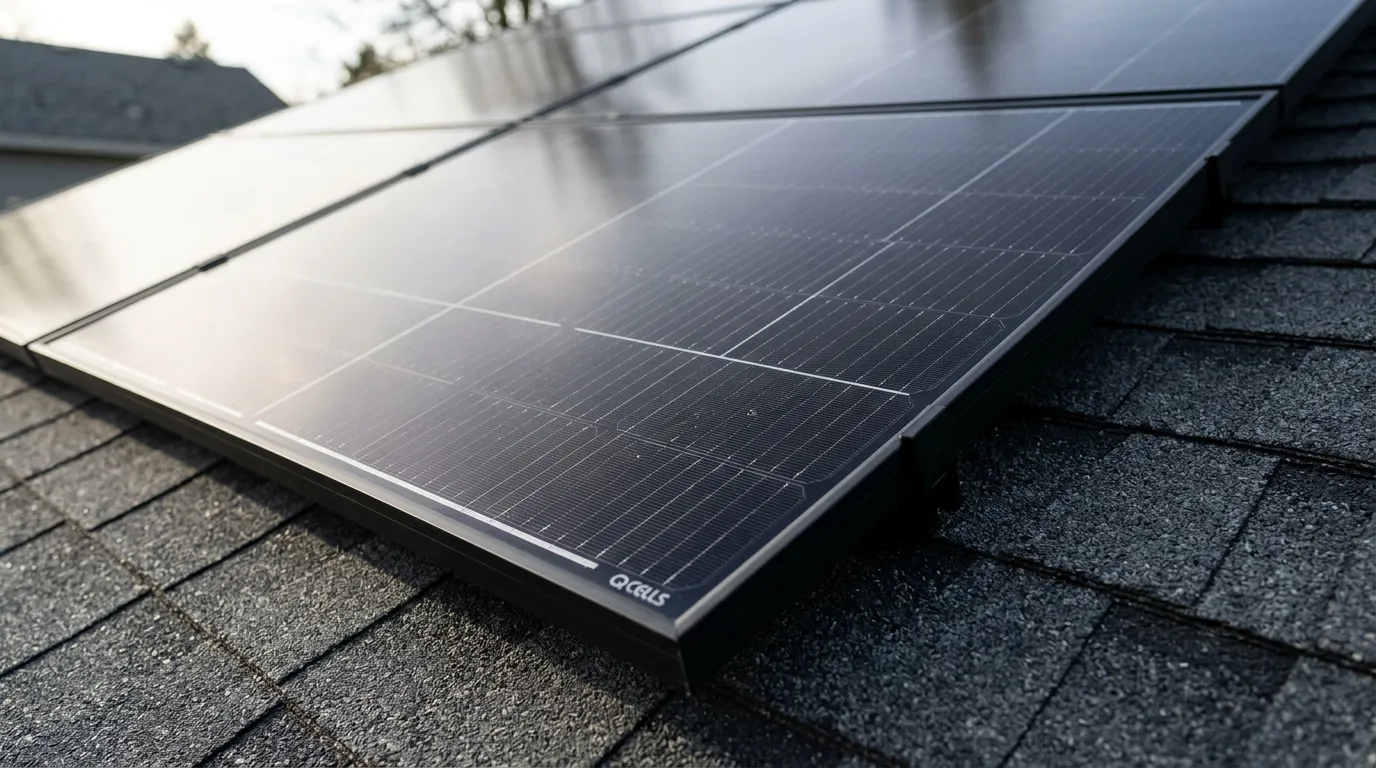
When researching residential solar options across Ohio, homeowners are quickly introduced to an alphabet soup of technical terms: cell architectures, temperature coefficients, inverter types, and wafer purities.
At the heart of every rooftop array, however, sits one fundamental decision: the silicon technology inside the panel module.
For years, the residential market has been dominated by two primary categories of silicon photovoltaic cells: monocrystalline and polycrystalline.
While both technologies perform the same core function—absorbing photons from daylight and releasing electrons to create an electrical current—they differ significantly in their manufacturing process, physical appearance, power density per square foot, and how they perform on typical Midwest roof profiles.
Here is a straightforward, trade-level comparison of both technologies to help you understand how they function on Ohio homes.
1. The Core Science: Single-Crystal vs. Multi-Crystal Silicon
The fundamental difference between these two panel categories starts at the microscopic level during manufacturing:
SILICON CRYSTAL STRUCTURE COMPARISON
Grown as a single, continuous cylindrical ingot of ultra-pure silicon; sliced into octagonal wafers with uniform atomic alignment.
Multiple silicon fragments melted together and poured into a square mold; forms distinct crystalline boundaries and marble-like texture.
Monocrystalline (The Single Crystal)
Monocrystalline cells are manufactured using the Czochralski process, where a seed crystal is lowered into molten silicon and slowly drawn upward to form a single, continuous crystal ingot. Because the resulting silicon structure is one uniform crystal, electrons experience minimal resistance when flowing through the cell. This pure lattice gives the cells their characteristic deep black hue and higher energy conversion rates.
Polycrystalline (The Multi-Crystal)
Polycrystalline panels (sometimes called multicrystalline) take a simpler manufacturing approach. Instead of growing a single continuous crystal, multiple silicon fragments are melted together in a crucible and allowed to cool in square blocks. As the silicon solidifies, multiple crystal structures form within each block. These internal crystalline boundaries create slight friction for moving electrons, resulting in a speckled, iridescent blue appearance with slightly lower conversion efficiency.
2. Power Density: Maximizing Power on Complex Ohio Roofs
One of the most practical differences between mono and poly panels comes down to power density: the amount of wattage generated per square foot of available roof space.
| Panel Technology | Relative Power Density | Best Roof Fit in Ohio |
|---|---|---|
| Monocrystalline | High wattage per sq ft | Compact roofs, dormers, hip planes |
| Polycrystalline | Moderate wattage/sq ft | Expansive rural barns & open gables |
Navigating Ohio’s Diverse Roof Architecture
Midwest homes feature a wide variety of architectural roof profiles:
- Hip roofs and intersecting gables with dormers and plumbing vent pipes common in suburban Columbus and Akron.
- Cape Cod and two-story colonial homes where only one or two roof planes face optimal southern or western exposures.
When your optimal southern roof plane is limited in square footage—or interrupted by a brick chimney or valley—every square foot matters. Because monocrystalline panels generate more electrical wattage per square foot of surface area, you can achieve your household’s target energy production using fewer physical panels.
When Roof Area Is Abundant
On large, uncomplicated roofs—such as wide agrarian outbuildings, workshops, or sprawling single-story ranches with expansive south-facing gable planes—power density is less critical. If roof real estate is plentiful and unshaded, slightly larger arrays using moderate-density panels can deliver dependable energy output.
3. Aesthetics: Curb Appeal and Neighborhood Integration
How a solar array looks from the driveway has become an increasingly important consideration for Ohio homeowners, particularly in established subdivisions or communities with architectural guidelines.
VISUAL APPEARANCE PROFILES
Solid black silicon, black backsheet, black anodized aluminum frame. Blends discreetly into dark shingles.
Distinct blue crystalline hue, white backsheet grid, silver aluminum frame. Creates high contrast on dark roofs.
The All-Black Monocrystalline Profile
Modern monocrystalline modules are widely offered in “all-black” configurations. By pairing black silicon wafers with a black composite backsheet and a black aluminum mounting frame, the entire array presents a sleek, uniform, low-profile appearance. From the street, all-black panels blend seamlessly into dark architectural shingles, creating a clean, modern aesthetic.
The Traditional Blue Polycrystalline Profile
Polycrystalline panels feature a distinct blue tint with a crystalline shimmer that changes under varying sun angles. When combined with silver aluminum frames and white backing grids, poly arrays have a noticeably higher visual contrast against standard dark residential roofs.
4. Temperature Tolerances and Seasonal Midwest Weather
Ohio experiences significant temperature swings throughout the year, ranging from frigid January sub-zero cold snaps to humid 90-degree July heatwaves.
| Operating Factor | Monocrystalline Modules | Polycrystalline Modules |
|---|---|---|
| Cold Weather Response | Excellent conductivity | Dependable conductivity |
| Summer Heat Drag | Slightly lower resistance | Slightly higher resistance |
| Surface Snow Melting | Dark black warms quickly | Blue surface absorbs sun |
| Light Capture in Rain | Strong diffuse light capture | Moderate diffuse capture |
Summer Heat Behavior
As ambient temperatures climb during mid-summer, all solar cells experience a slight decrease in electrical efficiency. Monocrystalline cells generally feature slightly better temperature coefficient ratings, meaning they retain a marginally higher percentage of their efficiency during high-heat summer afternoons.
Winter Snow and Overcast Days
During Ohio’s cloudy, overcast winter weeks, monocrystalline panels perform relatively well in capturing diffuse, indirect daylight. Furthermore, their solid black appearance helps the panels absorb ambient solar radiation when the sun emerges, warming the glass slightly to assist natural snow shedding down the roof slope.
5. Equipment Warranties and Long-Term Degradation
All photovoltaic panels experience a very slow, natural decline in electrical output over decades of exposure to ultraviolet light and weather, a process engineers refer to as degradation.
- Performance Warranties: Reputable manufacturers typically provide twenty-five-year power production warranties, guaranteeing that panels will still generate a substantial percentage of their original rated capacity after twenty-five years of continuous operation.
- Product / Workmanship Warranties: Cover physical module defects, such as frame corrosion, junction box integrity, or glass delamination, commonly ranging from ten to twenty-five years depending on the manufacturer tier.
Because manufacturing techniques have matured across the industry, both mono and poly panels from tier-one manufacturers exhibit dependable durability against Midwest wind and hail when installed with proper structural racking.
Frequently Asked Questions (Solar Panel Types)
What is the structural difference between mono and poly solar cells?
Monocrystalline cells are sliced from a single, continuous crystal of pure silicon, creating a uniform lattice that allows electrons to move with minimal resistance. Polycrystalline cells are formed by melting multiple silicon fragments together, which creates internal crystal boundaries that slightly impede electron flow.
Which panel type generates more electricity on a small roof?
Monocrystalline panels generate more wattage per square foot of surface area. If your roof has limited southern exposure or is segmented by chimneys, dormers, or valleys, monocrystalline panels allow you to produce more power within that smaller footprint.
Are all-black solar panels more expensive to install?
While all-black monocrystalline panels carry a slight premium due to the additional refining and aesthetic manufacturing processes, they have largely become the standard for residential installations because of their higher power density and discreet curb appeal on residential shingles.
The Value of an On-Site Solar Assessment
Choosing between panel technologies isn’t something that can be decided using a one-size-fits-all rule.
The ideal configuration depends entirely on your home’s unique layout:
- How many square feet of unshaded roof plane are available?
- What direction do your primary roof planes face?
- What is your household’s actual twelve-month electricity usage?
- What are your aesthetic preferences regarding street-facing curb appeal?
An experienced local solar specialist will model your roof in three dimensions, calculate real-world shading from nearby trees, and present a custom array layout that matches your home’s exact physical geometry.
Editorial Notice & Legal Disclaimer
Important Consumer Notice: This article is published strictly for general informational, perspective, and editorial opinion purposes. It is not designed to provide electrical engineering, utility regulatory, financial, legal, or product manufacturing advice, nor is it intended to educate, instruct, or influence any homeowner's purchasing or contracting decisions.
Photovoltaic panel efficiency, degradation curves, aesthetic finishes, and manufacturer warranties vary across brands and production batches. Actual electrical generation depends on roof pitch, tree canopy shading, seasonal ambient temperatures, and inverter performance. Home Services OH LLC does not manufacture photovoltaic modules, provide engineering certifications, or guarantee specific energy yields or financial returns. Homeowners should consult directly with an independent, licensed, and insured local solar professional to evaluate their specific rooftop layout.
Ready to Design the Right Solar Array for Your Roof?
Explore tailored solar options designed specifically for your home’s architecture and energy needs. Connect with trusted, independent local specialists through Home Services OH.
👉 Request an In-Person Solar & Roof Assessment
We connect Ohio homeowners with dedicated, independent local specialists who evaluate solar options honestly and design systems that stand the test of time.